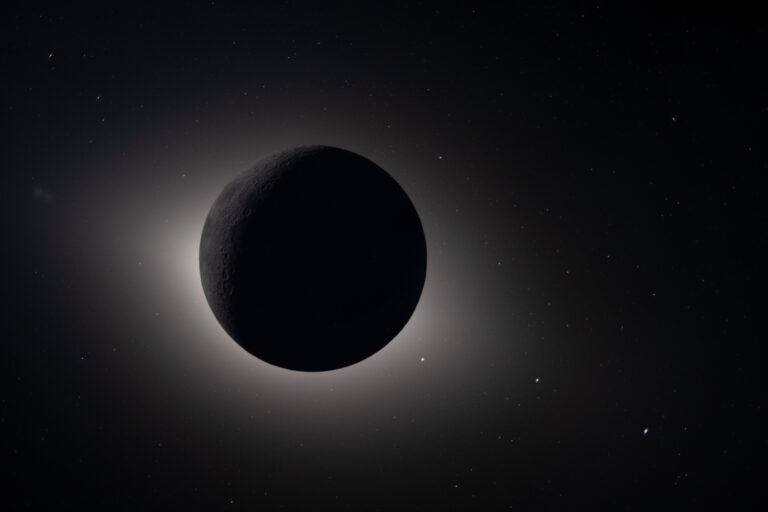
A single photograph captured during NASA’s crewed lunar flyby mission, Artemis II, using an unmodified, consumer-grade mirrorless camera—the ‘Nikon Z9’—has completely shaken up the astronomical community.
According to a recent report by the global camera specialty outlet NikonRumors, a joint Japanese research team consisting of Professor Kohji Tsumura from Tokyo City University and Dr. Ko Arimatsu from the National Astronomical Observatory of Japan has successfully decoded the large-scale 3D morphology of the optical F-corona (inner zodiacal light)—which harbors critical clues to the formation of our solar system—by analyzing a publicly released, uncalibrated JPEG image.
This remarkable scientific achievement was formally peer-reviewed and published in the prestigious ‘The Astrophysical Journal Letters’ on June 9, 2026, catching the global scientific community entirely by surprise.
1. A 2-Second Exposure and a Humble 'Legacy Lens' Conjure an Astronomical Miracle
The historic study proves that a mass-production, consumer-grade camera easily bought at an electronics store can serve as a highly precise, scientifically viable measurement instrument in deep space—bypassing the need for multi-billion dollar space observatories.
- A 54-Minute Total Solar Eclipse Behind the Moon: While executing a loop behind the far side of the Moon, the Artemis II crew experienced a rare cosmic alignment where the lunar disk fully occulted the Sun. Operating in absolute darkness without a tripod, an astronaut pointed an off-the-shelf Nikon Z9 out the window to capture the singular, historic shot titled ‘Artemis II in Eclipse’.
- Decidedly Ordinary Camera Metadata: According to the official EXIF metadata, the image was captured using an unmodified, stock Nikon Z9 body paired with a decades-old analog legacy lens, the ‘Nikkor 35mm f/2D’. The exposure parameters were remarkably standard: an exposure time of 2 seconds, aperture set to f/2, and ISO 1600, recorded not in a raw file format, but as a standard compressed JPEG.
2. Four Crucial Scientific Breakthroughs Discovered in a Single JPEG
By using the brightness of background field stars captured in the margins of the photo as an absolute baseline for "stellar calibration," astronomers were able to isolate and map the extremely faint emissions of the F-corona—the glow of sunlight scattering off fine interplanetary dust.
- A Flattened, Pancake-Like Halo: The study proved that the dust halo (F-corona) surrounding the Sun is not a symmetric sphere but is heavily flattened and aligned closely with the ecliptic plane of the solar system.
- Steeper Light Falloff Than Predicted: The density of the light decays at a systematically steeper rate as it moves further from the solar center than previous space-based simulations (such as the ZodiSURF model) had predicted.
- Lopsided, Asymmetric Brightness: The distribution of the interplanetary dust is slightly irregular, causing the northern half of the glow to shine modestly brighter than the southern half, with a similar imbalance observed between the east and west horizons.
- Proof of Pure Dust Scattering: Spectroscopic analysis confirmed that the photographed halo consists almost entirely of sunlight scattered by micro-dust particles (optical F-corona), rather than the plasma of the "true" solar corona.
3. “A New Paradigm for Space Cameras”... The Rugged Viability of the Nikon Z9
This discovery sends a shockwave through the aerospace hardware industry as much as it does the scientific community. Historically, space agencies like NASA have spent astronomical budgets designing custom, heavily shielded imaging hardware to withstand the freezing temperatures and intense radiation of deep space.
This study demonstrates that a modern, commercial-off-the-shelf mirrorless system equipped with a high-durability stacked image sensor (completely devoid of a physical mechanical shutter, which is prone to failure) can reliably withstand harsh cosmic radiation fields and act as a 100% quantitative scientific instrument with zero hardware modifications.
✍️ Editor's Note
"To think that the exact same Nikon Z9 sitting in retail display cases has unlocked mysteries of solar dust distribution from lunar orbit is enough to give any camera enthusiast goosebumps! What is truly mind-blowing is that astronomers reverse-engineered this cosmic dust map not from a massive uncompressed RAW file, but from a standard, compressed 'JPEG.' The sheer precision achieved by pairing an off-the-shelf body with a legacy Nikkor 35mm f/2D lens shows that accessible, commercial hardware can readily supplement elite space telescopes. The Z9—which first proved its shutterless, high-speed dominance across sports stadiums and safari fields on Earth—has now transcended terrestrial boundaries to write a legendary chapter in space exploration. Nikon shooters, you have every right to look at your cameras with immense pride tonight!"
#Nikon #NikonZ9 #Z9 #ArtemisII #Artemis2 #TotalSolarEclipse #SolarCorona #FCorona #ZodiacalLight #Astrophysics #TheAstrophysicalJournalLetters #TokyoCityUniversity #InterplanetaryDust #SpacePhotography #Nikkor35mm #NikonInSpace #NASA #SpaceScience #CameraNews #NikonRumors