A Decade of Trust: From the Nikon D5 to the Next-Generation Z9—Optical Technology That Withstood Extreme Space Environments

"The fact that a DSLR camera released a decade ago is being used as the primary tool inside the state-of-the-art Orion spacecraft is deeply telling. In the extreme conditions of space, what is required is not 'the latest' but 'proven reliability.' The 12,217 photos released this time are more than just records; they are evidence of how far human technology can endure."
■ Nikon D5: A Decade of Service Built on Trust
NASA recently released 12,217 unedited photos taken during the Artemis II mission to the public. The most notable detail in this archive is that the Nikon D5, a model from ten years ago, was used as the primary camera for the mission.
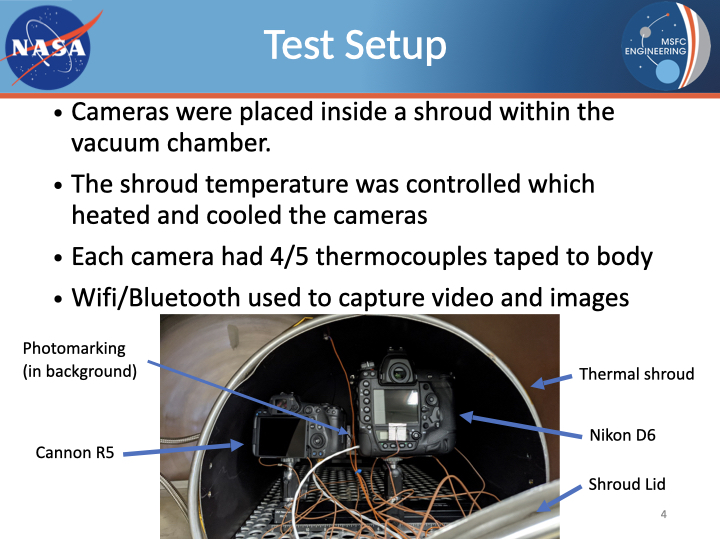
Space environments are filled with intense radiation and rapid temperature fluctuations. Instead of simply choosing the newest model, NASA focused on the reliability of the D5, which had passed tens of thousands of vibration and vacuum tests and maintained stable sensor data even under deep-space radiation exposure. In fact, during the mission, Commander Reid Wiseman succeeded in capturing the Earth's horizon with absolute clarity using an ultra-high sensitivity setting of ISO 51,200.
■ Z9: Challenging the Next Generation of Space Standards
Tests for the future were conducted simultaneously. Nikon’s flagship mirrorless camera, the Z9, was also deployed on this mission to undergo deep-space radiation resistance testing. The analysis revealed that the Z9's sensor showed no significant difference in noise levels before and after the flight, earning it a passing grade.
NASA applies rigorous standards for 'flight-qualified' certification. A camera must pass evaluations for operability while wearing spacesuit gloves, heat dissipation structures, and lubricant performance in a vacuum to be allowed on a spacecraft. While several candidate models were considered in 2022, Nikon was ultimately selected for its "reliability."
■ Records That Transcend Scientific Data
These photographs hold great significance not only for their artistic value but also as scientific data. Real-world data, such as reflected light from Orion’s windows and blurring in microgravity, will serve as essential material for refining cameras for the upcoming Artemis III lunar landing mission. The partnership between NASA and Nikon, which began in 1999, is now looking beyond the Moon and toward the deeper reaches of space.
[Tags] #NASAReleasedIt #NikonDidIt #CapturedSpace #ProvenReliability #HeadedToTheMoon #WithstoodRadiation #PreparedForTheFuture #ItWasArtemisII #NikonRumorsReportedIt